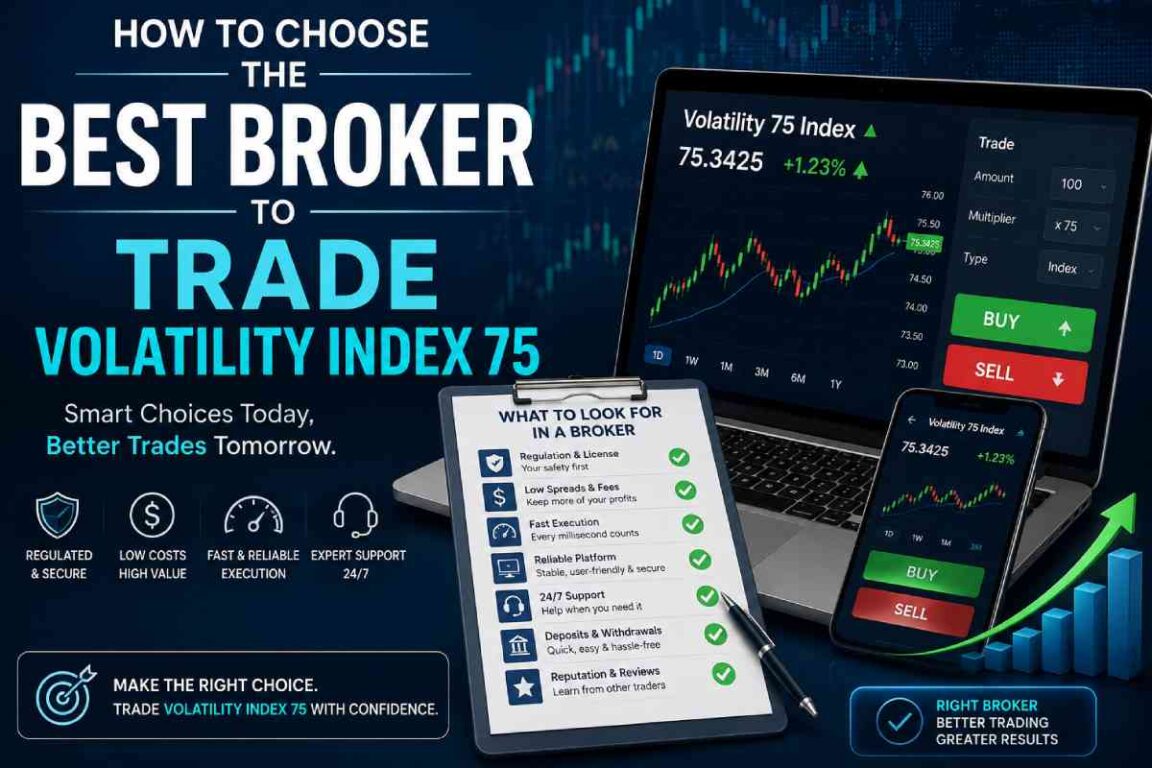
Selecting the best broker to trade on the Volatility Index 75 can make all the difference to your trading journey. The Volatility 75 index, also known as V75, is a synthetic index created to offer high yet steady price action. With fast price action, a trader needs to select a broker that offers prompt execution, steady trading conditions, and platform stability. Considering a broker beyond flashy adverts can enable you to deal with this market’s peculiar nature.
Here are five factors to consider before selecting a broker, as they can enable making a better choice.
Check Trading Conditions
One of the first things to look for when selecting a broker to trade the Volatility Index 75 is the general trading conditions. Check the spreads, minimum trading sizes, leverage, margin requirements, and any associated commission or other fees. These costs can influence your results, especially if you frequently enter and exit trades. A suitable broker should offer clear pricing and explain its trading costs. Choose from several providers, rather than simply opening an account because it offers high leverage or low startup deposits.
Evaluate Platform Reliability
The Volatility 75 index can show large price swings, so platform stability is critical. You should seek a broker that offers a stable platform that provides you with charting capabilities, the ability to place and modify orders, and to view your open positions in real time, without delays. You should also determine whether the platform is supported on your desired device, and if its interface provides the technical tools you wish to use. Order execution is another factor to consider; if your orders are delayed, you may miss your ideal entry and exit points.
Consider Security and Regulation
Never ignore security when choosing a broker to trade Volatility Index 75. Study the broker’s corporate information, regulatory status, and client fund handling policy and security before you deposit your funds. Before you choose a broker to trade Volatility Index 75, evaluate its security features, trading conditions, and services offered to trade before creating an account. An honest and reputable provider will be clear about who is running the brokerage and how client accounts will be handled.
A mindful broker must clearly disclose who runs the brokerage and how the client accounts are managed. You may check its terms and conditions, withdrawal procedure, and customer support before you open an account.
Review Available Trading Tools
Using good analytical resources can help develop and implement a structured trading plan. You want a broker that offers charting tools, technical indicators, risk management options, and educational resources. Good resources can help improve market analysis but will not guarantee profitable results. It can be helpful to know how to trade the Volatility 75 index using a strategy that fits your experience, risk tolerance, and trading objectives.
Test Customer Support and Withdrawals
Customer support is especially useful when facing account, platform, or transaction problems. Find out about the channels you can use to contact support before picking a broker to trade the Volatility Index 75. In addition, you should understand the deposit and withdrawal options of a broker, how quickly the transactions are processed, and the associated fees. Try out how it works first with a demo account or a small deposit to gauge how it works before investing more money.
Conclusion
To pick a broker to trade the Volatility Index 75, you generally need to compare each one on trading costs, software quality, security, analysis tools, and customer support. Instead of picking the best one on one sexy feature, find the better overall broker based on all five and adjust your volatility trading strategy and risk-management plan accordingly. That should give you the best sense of environment and trading discipline for Volatility 75.