
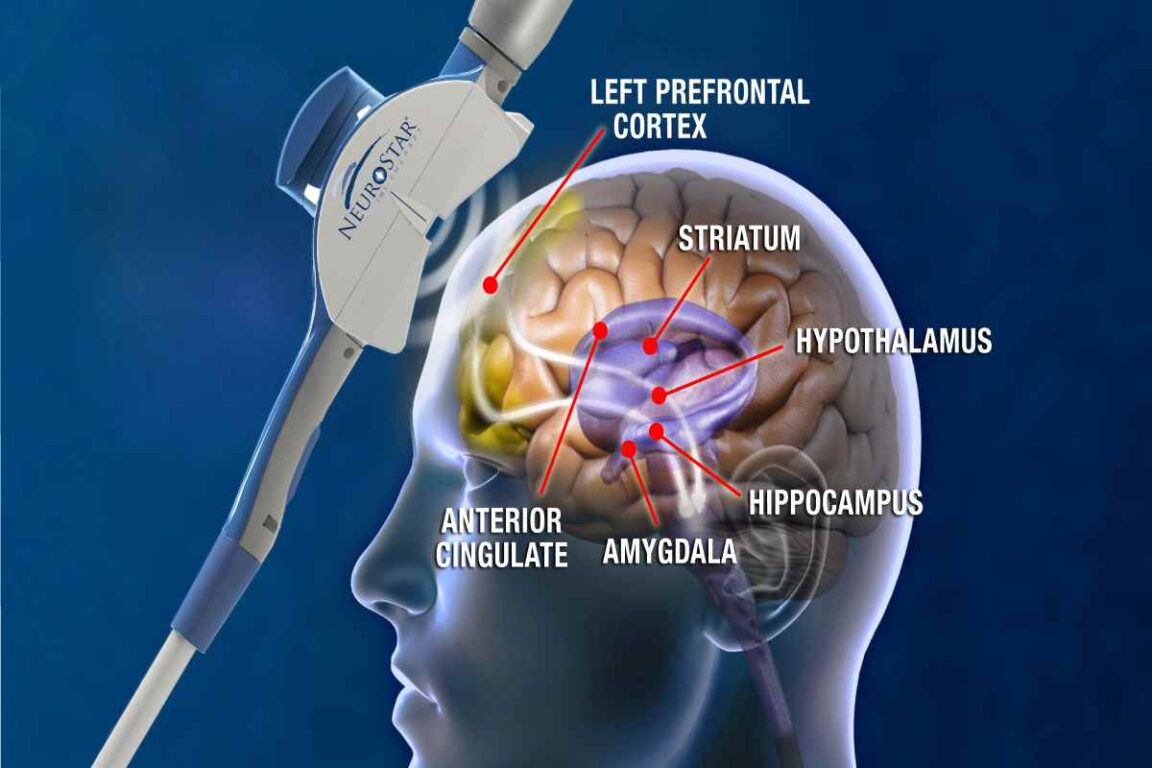
rTMS therapy (repetitive Transcranial Magnetic Stimulation) is a non-invasive treatment used to help people with certain mental health conditions, especially depression. Over the past decade, rTMS therapy has gained attention as an alternative option for individuals who have not responded well to medication or traditional therapy.
Unlike medications that affect the entire body, rTMS therapy uses targeted magnetic pulses to stimulate specific areas of the brain involved in mood regulation. Because of this targeted approach, many patients experience fewer side effects compared with traditional treatments.
In this guide, we’ll explain what rTMS therapy is, how it works, its benefits, possible side effects, treatment process, costs, and who may benefit from it.
What Is rTMS Therapy?
Repetitive Transcranial Magnetic Stimulation (rTMS) is a medical treatment that uses magnetic fields to stimulate nerve cells in the brain.
During the procedure:
- A device with an electromagnetic coil is placed against the patient’s scalp.
- The device sends magnetic pulses to targeted areas of the brain.
- These pulses stimulate neurons that are associated with mood control.
The treatment is most commonly used for major depressive disorder (MDD) when antidepressant medications have not been effective.
According to the National Institute of Mental Health (NIMH), rTMS is an FDA-approved therapy for treatment-resistant depression.
How rTMS Therapy Works
The brain contains complex neural circuits that regulate mood, emotions, and behavior. In some individuals with depression or other conditions, certain areas of the brain may be underactive.
rTMS therapy works by:
- Stimulating specific brain regions
- Improving communication between neurons
- Enhancing brain activity in mood-related areas
Magnetic pulses pass through the skull and activate nerve cells without requiring surgery or anesthesia.
Conditions Treated With rTMS Therapy
Although rTMS therapy is most commonly used for depression, researchers are exploring its potential for other conditions.
| Condition | Treatment Use |
| Major Depressive Disorder | Most common use |
| Anxiety disorders | Sometimes used |
| Obsessive-Compulsive Disorder (OCD) | FDA-approved in some cases |
| Post-Traumatic Stress Disorder | Being studied |
| Parkinson’s disease symptoms | Experimental research |
Doctors determine eligibility based on medical history and symptoms.
Benefits of rTMS Therapy
rTMS therapy offers several advantages compared with traditional treatments.
Non-Invasive Treatment
Unlike surgical procedures, rTMS does not require incisions or implants.
Fewer Side Effects
Many antidepressant medications cause side effects such as weight gain, sleep problems, or sexual dysfunction. rTMS typically causes fewer systemic side effects.
No Anesthesia Required
Patients remain awake and alert during the treatment session.
Outpatient Procedure
Most people receive treatment in a clinic and return home immediately afterward.
rTMS Therapy Benefits Overview
| Benefit | Description |
| Non-invasive | No surgery required |
| Targeted brain stimulation | Focuses on specific brain regions |
| Minimal recovery time | Patients resume normal activities |
| Alternative for medication-resistant depression | Helpful when medications fail |
rTMS Therapy Procedure
The treatment process involves several steps.
Step 1: Initial Evaluation
A healthcare professional evaluates the patient’s symptoms, medical history, and treatment goals.
Step 2: Brain Mapping
The doctor identifies the exact brain location where stimulation will be applied.
Step 3: Treatment Sessions
Patients usually receive treatment:
- 5 days per week
- For 4–6 weeks
- Each session lasting about 20–40 minutes
During the session, the magnetic coil is placed on the scalp and pulses are delivered to the targeted brain region.
What Does rTMS Therapy Feel Like?
Many patients describe the sensation as:
- Light tapping on the scalp
- Mild tingling or knocking feeling
- Slight muscle twitching near the treatment area
Most patients adjust quickly to the sensation after the first few sessions.
Possible Side Effects of rTMS Therapy
Although rTMS therapy is generally considered safe, some patients may experience mild side effects.
| Side Effect | Description |
| Headache | Usually mild and temporary |
| Scalp discomfort | Near the treatment site |
| Tingling or twitching | During stimulation |
| Lightheadedness | Rare |
Serious side effects are uncommon but may include seizures in extremely rare cases.
Patients should always discuss potential risks with a healthcare provider before starting treatment.
rTMS Therapy Success Rate
Clinical studies suggest that rTMS therapy can be effective for people with treatment-resistant depression.
| Outcome | Approximate Result |
| Symptom improvement | 50–60% of patients |
| Full remission | 30–40% of patients |
Results vary depending on individual factors such as severity of symptoms and treatment adherence.
Who Is a Good Candidate for rTMS Therapy?
rTMS therapy may be suitable for individuals who:
- Have depression that does not respond to medication
- Experience intolerable medication side effects
- Prefer non-drug treatments
- Have not benefited from psychotherapy alone
However, certain individuals may not be eligible.
Who Should Avoid rTMS Therapy
People with certain medical conditions should consult their doctor before considering rTMS therapy.
| Condition | Reason |
| Metal implants in the head | Magnetic fields may interfere |
| History of seizures | Increased risk |
| Certain neurological conditions | Requires medical evaluation |
A medical professional determines eligibility.
Cost of rTMS Therapy
The cost of rTMS therapy varies depending on location, provider, and treatment duration.
| Country | Estimated Cost |
| United States | $6,000 – $12,000 for full treatment |
| United Kingdom | £3,000 – £7,000 |
| India | ₹1,50,000 – ₹3,50,000 |
Some insurance providers cover rTMS therapy if patients meet specific criteria.
rTMS Therapy vs Other Depression Treatments
| Treatment | Invasiveness | Side Effects | Recovery Time |
| Medication | Low | Moderate | None |
| Electroconvulsive Therapy (ECT) | High | Higher | Recovery needed |
| rTMS Therapy | Non-invasive | Mild | None |
This comparison shows why rTMS therapy is becoming a popular option.
Research and Scientific Evidence
Multiple clinical studies support the effectiveness of rTMS therapy for depression and other conditions.
For example:
- The National Institute of Mental Health (NIMH) reports that rTMS can significantly reduce depression symptoms in some patients.
- The Mayo Clinic states that rTMS may help individuals who have not responded to antidepressants.
These studies continue to explore the long-term effects and additional uses of rTMS therapy.
Future of rTMS Therapy
Researchers are currently studying rTMS therapy for additional health conditions.
Areas being explored include:
- Alzheimer’s disease
- Addiction treatment
- Chronic pain
- Stroke recovery
Advancements in brain stimulation technology may expand the use of rTMS in the future.
Final Thoughts
rTMS therapy is a promising non-invasive treatment for individuals struggling with depression and other neurological conditions. By using targeted magnetic stimulation, this therapy can help activate brain regions involved in mood regulation.
While it may not work for everyone, many patients experience significant improvements in their symptoms. As research continues, rTMS therapy may become an increasingly important tool in mental health treatment.
Anyone considering rTMS therapy should consult a qualified healthcare professional to determine whether it is the right option.