
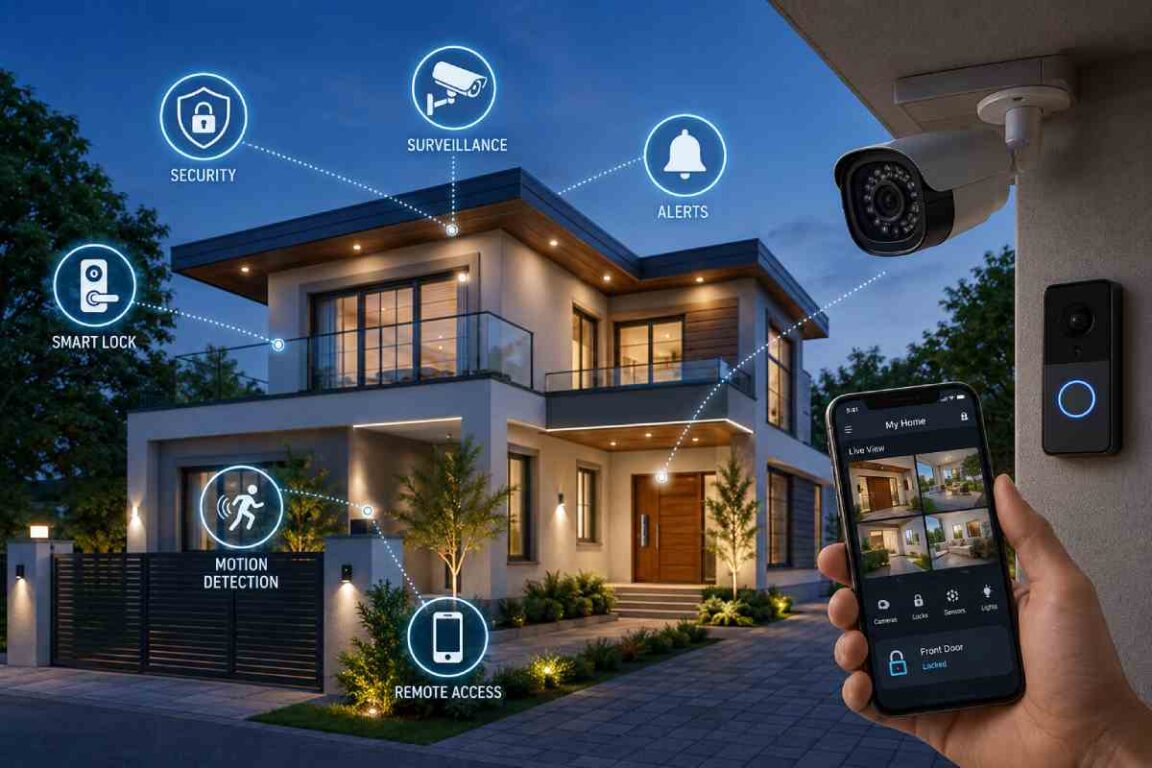
Office buildings, hospitals, and warehouses all share one challenge: controlling who comes and goes without slowing everyone down. As organisations grow more security-conscious, the technology behind their doors has quietly become far more sophisticated than a simple lock and key company’s IT assets.
From Mechanical Locks to Digital Gatekeepers
For most of the twentieth century, security meant physical keys and human guards stationed at entrances. This approach worked when organisations were smaller and less distributed, but it created obvious problems as companies expanded across multiple floors, buildings, or even countries. Lost keys meant expensive lock changes. Former employees who never returned their keys posed ongoing risks. There was no way to know exactly who had entered a building at a given time, or to quickly revoke someone’s access after they left the company.
The shift toward electronic solutions changed this equation entirely. Instead of physical keys, organisations began issuing cards, fobs, or mobile credentials that could be programmed, tracked, and deactivated remotely. This transition didn’t happen overnight, but it fundamentally altered how businesses think about who belongs where, and when.
What Makes a Modern System Different
Today’s security infrastructure does far more than open doors. A well-designed access control system can integrate with a building’s broader network, allowing administrators to set different permission levels for different groups of people, monitor entry patterns in real time, and generate detailed logs for compliance or investigation purposes.
Consider a hospital, where certain staff need access to medication storage rooms while others should never be permitted entry. Or a corporate headquarters where cleaning staff need access during off-hours but shouldn’t be able to enter executive offices. These nuanced requirements are difficult to manage with traditional locks but become straightforward with digital permission systems.
Several features have become standard in these setups:
- Time-based restrictions that limit entry to specific hours or days
- Instant credential revocation when someone leaves an organisation
- Integration with video surveillance for a complete security picture
- Remote management through cloud-based platforms
- Detailed audit trails for regulatory compliance
These capabilities matter beyond simple convenience. In sectors like healthcare, finance, or education, regulators often require organisations to demonstrate exactly who accessed sensitive areas and when. Digital systems make this documentation almost effortless compared to manual sign-in sheets or guesswork.
Organizations should also evaluate unfamiliar websites and online services before allowing employees to use them on company systems; understanding how platforms such as GPLinkings.com work can help users make more informed decisions before interacting with third-party online services.
The Human Side of Security Technology
It’s tempting to think of security upgrades purely in technical terms, but the human experience matters just as much. Employees who struggle with clunky systems or forget cumbersome procedures often find workarounds that undermine the very protections these systems are meant to provide. Propped-open doors and shared access cards are common examples of security theatre rather than genuine protection.
The most effective implementations balance robust protection with genuine ease of use. Mobile credentials stored on smartphones, for instance, eliminate the need to carry separate cards while still providing the same level of security oversight. Biometric options, though more expensive to implement, remove the possibility of lost or shared credentials entirely.
Organisations like Nedap UK have spent years refining these systems based on real-world deployment across varied industries, from logistics hubs handling thousands of daily visitors to smaller offices with more modest needs. The lesson from this experience is consistent: security technology succeeds when it fits naturally into how people actually work, rather than forcing behavioural change that creates friction and resistance.
Technology can also support a broader culture of protection, and today’s innovative gadgets that help keep you safe show how connected devices and modern security tools can provide additional layers of awareness and protection.
Looking Ahead
Buildings will keep evolving, and so will the systems that protect them. What remains constant is the underlying goal: giving the right people access to the right spaces, at the right times, without unnecessary complexity or risk. As technology continues advancing, the gap between robust security and genuine simplicity keeps narrowing, making thoughtful implementation more achievable than ever for organisations of every size.