
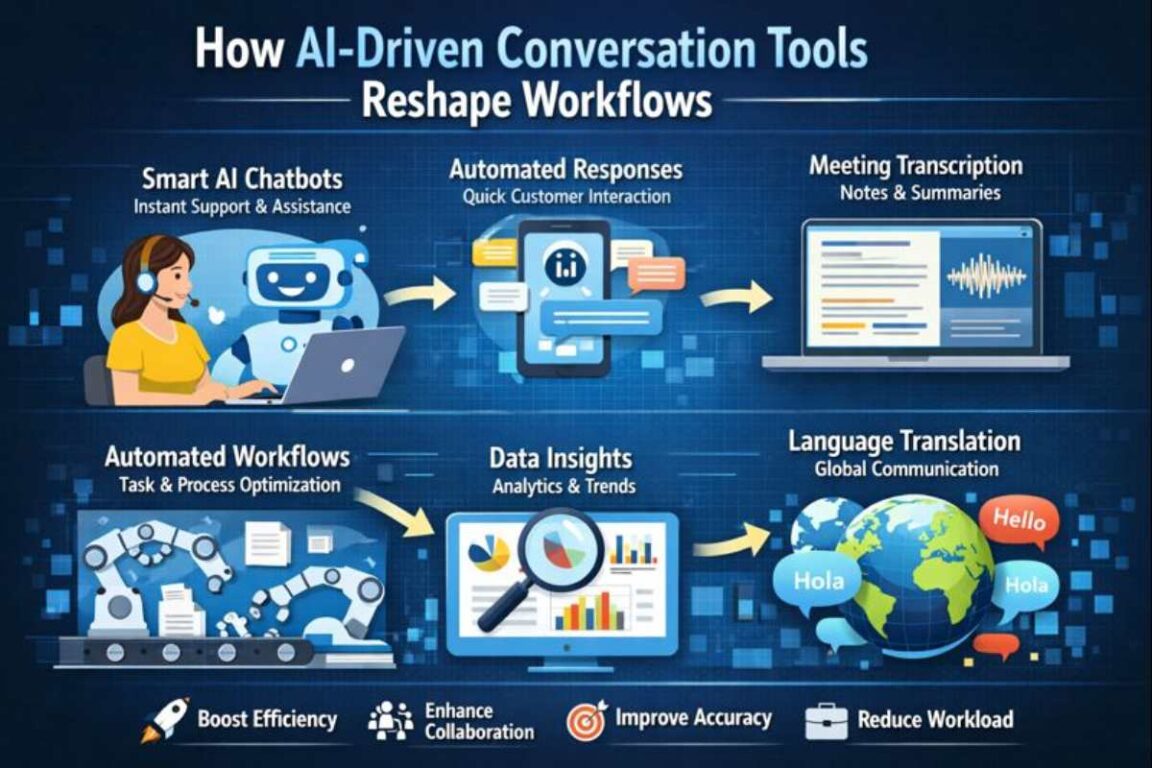
Every workplace runs on conversations. Meetings, sales calls, project check-ins, and internal discussions are where decisions are made and priorities take shape. Yet for many teams, those conversations fade quickly once the call ends, leaving important details scattered across notes, emails, or memory.
One of the most meaningful shifts in modern work has been the rise of AI-driven conversation tools built to capture and organize these moments. Instead of adding more dashboards or manual steps, these tools focus on turning everyday discussions into clear actions, shared context, and follow-through.
This article explores how conversation-focused AI tools are reshaping workplace workflows, where they add the most value, and why more teams are rethinking how meetings fit into real work.
How Conversation-Focused AI Tools Reshape Workflows
Not all AI-driven business tools solve the same problems. Some focus on analytics, others on automation or forecasting. One category, however, has had an outsized impact on daily workflows: tools that capture, summarize, and organize conversations.
Meetings and calls are where alignment happens, but they are also where information is most easily lost. Conversation-focused AI tools help teams retain decisions, surface insights, and reduce the manual effort that typically follows a meeting.
By turning spoken discussions into usable records, these tools close the gap between talking and doing. Teams spend less time retracing steps and more time moving work forward with confidence.
Why Today’s Business Tools Matter More Than Ever
Not long ago, workplace software was mostly about storage and organization. Calendars scheduled time, documents held information, and task lists tracked progress. Each tool worked in isolation, leaving people to connect the dots on their own.
As teams became more distributed, that model started to break down. Important context lived inside conversations, not documents, and those conversations were rarely captured in a consistent way.
Conversation-focused AI tools respond directly to this problem. They help teams preserve context, align faster, and reduce the friction that comes from miscommunication. In a work environment where speed and clarity matter, that difference compounds quickly.
Turning Meetings Into Real Progress
Meetings are meant to move work forward, but many teams struggle to translate discussions into action. Notes are incomplete, follow-ups are delayed, and stakeholders who could not attend are left out of the loop.
This is where conversation tools change behavior. Platforms like Grain automatically capture meetings, highlight key moments, and create summaries that teams can revisit and share. Instead of relying on memory or scattered notes, teams gain a clear record of what was discussed and what comes next.
Using an AI note taker in this way allows teams to stay aligned without adding extra work. Important insights are captured as the conversation happens, follow-ups are easier to manage, and accountability becomes clearer across roles and departments.
Over time, this leads to fewer misunderstandings, smoother handoffs, and more consistent execution.
Fitting Conversation Tools Into Existing Workflows
One concern teams often have when adopting new software is whether it will disrupt the systems they already rely on. The most effective conversation tools are designed to fit naturally into existing workflows rather than replace them.
Meeting summaries can be shared in communication platforms where teams already collaborate. Key insights can sync to customer records in CRMs. Action items can feed directly into task or project management systems.
This approach keeps workflows familiar while improving how information flows through them. Teams do not need to learn entirely new processes. Instead, they strengthen the ones they already use by reducing friction and manual work.
Practical Considerations for Adoption
While conversation-focused AI tools offer clear benefits, thoughtful adoption still matters. Teams should consider a few practical factors before rolling them out.
Privacy and trust are essential, especially when conversations are being recorded or summarized. Clear guidelines help people feel comfortable using the tools consistently.
Change also takes time. Teams benefit from understanding how these tools support their work, not just how they function. Finally, even well-designed integrations require some setup and alignment with existing systems.
Addressing these points early helps ensure tools support productivity rather than create confusion.
What This Shift Means for the Future of Work
Work continues to become more collaborative and more distributed, which makes clarity increasingly valuable. Teams want fewer meetings that go nowhere and more conversations that lead to progress.
Conversation-focused AI tools support this shift by helping teams retain context, share insights, and act with confidence. Rather than collecting more data for its own sake, these tools make existing work more useful.
As organizations evolve, the ability to capture and reuse knowledge from conversations will play a growing role in how effectively teams operate.
Conclusion
AI-driven conversation tools are reshaping workflows by reducing friction and helping teams focus on what matters. By capturing insights from meetings and calls, these tools turn discussions into durable knowledge that supports better decisions and stronger collaboration.
For teams looking to work more efficiently without adding complexity, this shift is worth paying attention to. The right conversation tools do not just save time. They help teams move forward with clarity, alignment, and purpose.